
OAT coolant
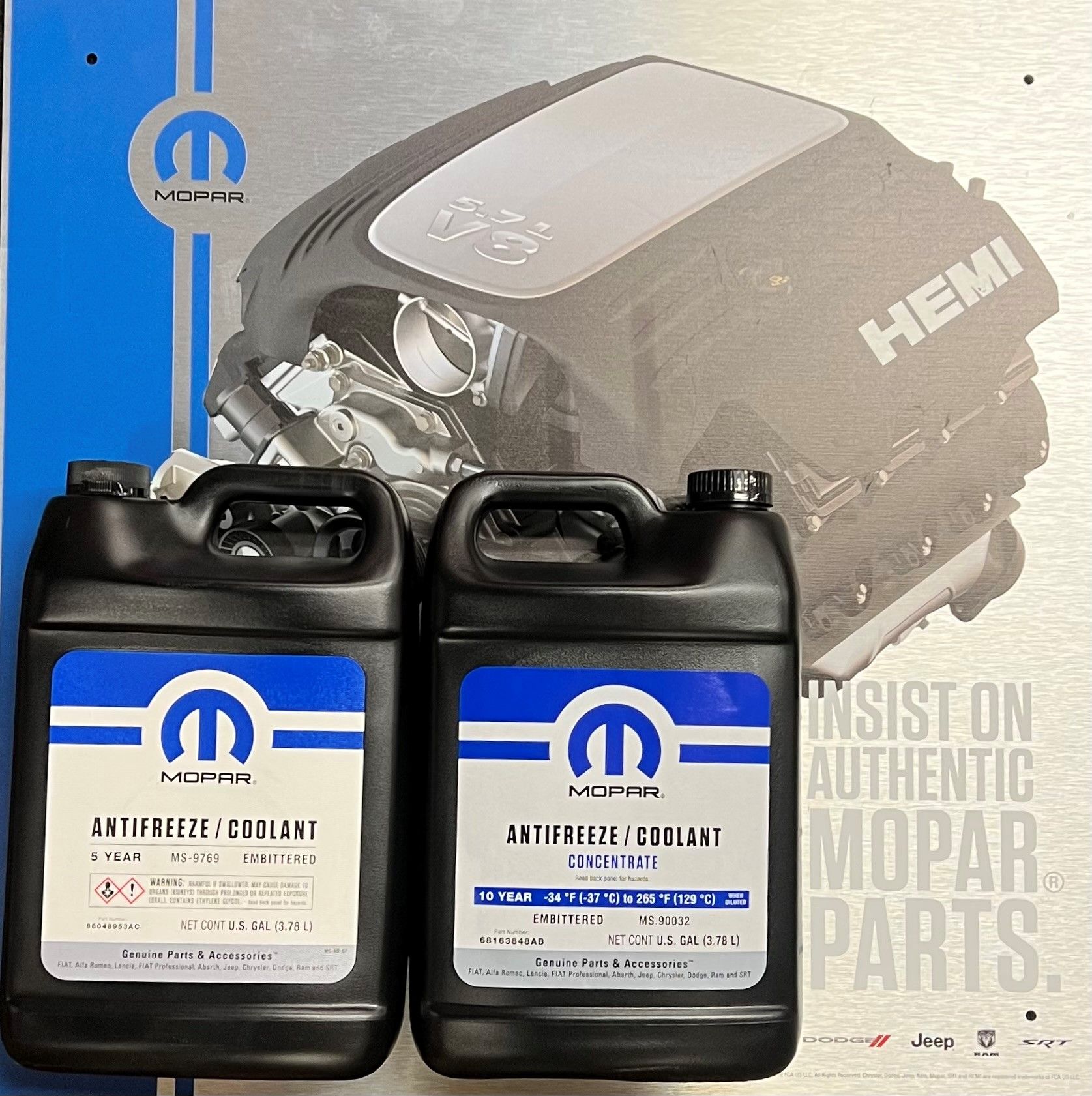
Do you know the difference between Mopar 5 Year Coolant and 10 Year OAT Coolant?
Coolant is a vital component of any vehicle's cooling system. It helps regulate the engine temperature and prevents corrosion of metal parts. There are two main types of coolant: Organic Acid Technology (OAT) and Hybrid Organic Acid Technology (HOAT). In this article, we will compare Mopar 5 Year Coolant and 10 Year OAT Coolant, two of the most popular coolants in the market.
Mopar 5 Year Coolant:
- Formulated specifically for Chrysler, Jeep, Dodge, and Ram vehicles
- Recommended for use in vehicles with 5-year or 60,000-mile coolant change intervals
- Hybrid Organic Acid Technology (HOAT) formula
- Protects against rust and corrosion
- Provides excellent heat transfer and engine cooling
- Comes in a ready-to-use formula that doesn't require dilution
10 Year OAT Coolant:
- Extended life coolant formula
- Protects against rust and corrosion for up to 10 years or 150,000 miles
- Organic Acid Technology (OAT) formula
- Provides excellent heat transfer and engine cooling
- Compatible with most aluminum and all-metal engine components
- Low silicate and low pH formula helps prevent coolant pump failures
Both Mopar 5 Year Coolant and 10 Year OAT Coolant provide excellent protection against rust and corrosion, and good heat transfer and engine cooling. The main difference between the two is the recommended change interval and the specific formula used. Mopar 5 Year Coolant is designed specifically for Chrysler, Jeep, Dodge, and Ram vehicles with 5-year or 60,000-mile coolant change intervals, while 10 Year OAT Coolant is an extended life coolant that provides protection for up to 10 years or 150,000 miles and is compatible with most vehicles. When choosing a coolant, it is important to consult the manufacturer's recommendations for your specific vehicle.
Note that two coolants are not interchangeable. Mixing 5 year HOAT and 10 year OAT can cause an adverse chemical reaction, leaving a sludge in your cooling system and losing its ability to perform its intended function, to cool your car. This can cause a slew of engine problems, and we don't want that.